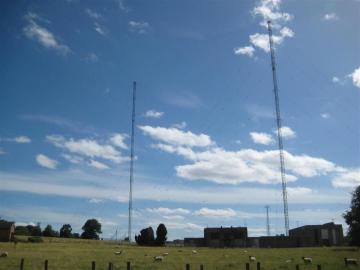
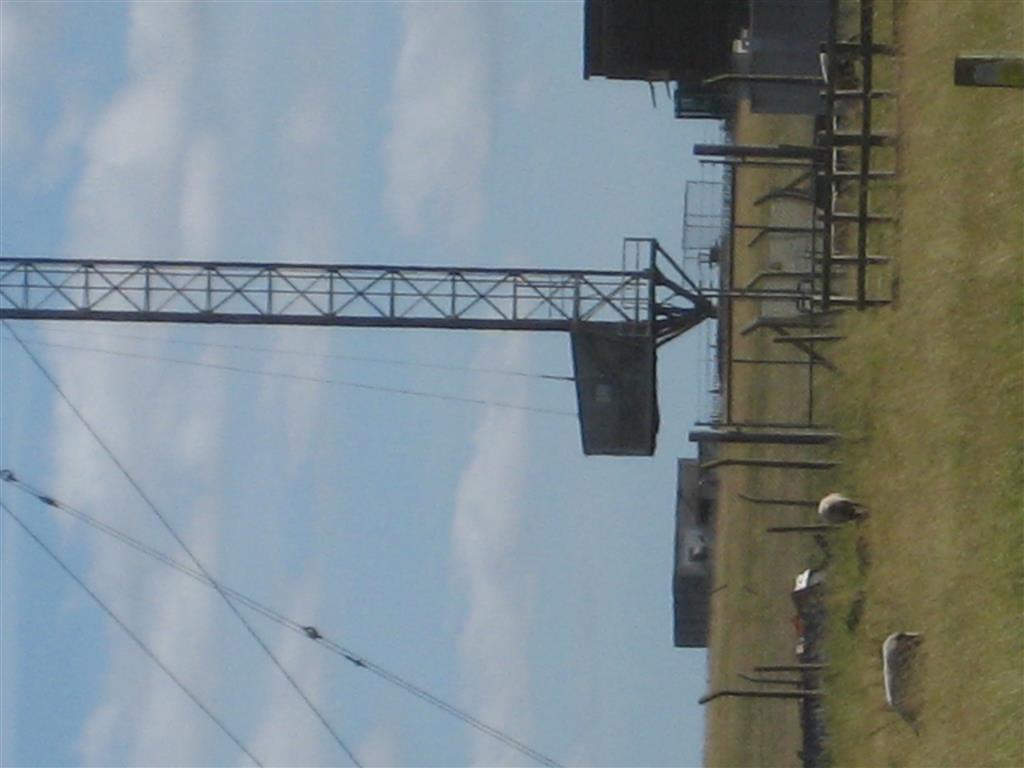
In 1933 the BBC began building its long-wave transmitter at Wychbold, though it would appear on the radio dials of European radios as "Droitwich". This site has been in constant use ever since then, transmitting up to half a megawatt of radio power. The most obvious feature of the site are the two 213 m tall masts of the long-wave antenna, one of which doubles as a medium-wave antenna. It used to be regarded as critical infrastructure, broadcasting messages during World War II to operatives deep in enemy territory, and indeed it can be received as far away as North America. The compound is highly secure and self-reliant, with massive diesel generators that kick into action within seconds of a mains power failure. Its frequency (currently 198 kHz, but originally 200 kHz) is defined by a rubidium atomic clock. In theory smart meters have replaced its function as a radio teleswitch control signal for certain electricity meters, but smart meters can't match its universal coverage. Yet in a couple of weeks, just a handful of years from its one hundredth birthday, the transmitter will be unceremoniously turned off forever. It is regarded as obsolete and not worth maintaining. However, during the 2025 Iberian peninsula blackout, it was AM radio that kept people informed as to what was happening, because it soldiered on whilst modern digital channels went dark. The BBC considers the future to be digital (they often don't mention VHF/FM in station idents, probably because it is threatened with closure), even though interviews on their news programmes are blighted with "oh, it looks like we've lost them" as yet another digital 'line' dies. My internet connection often goes down (as I write it is going extremely slowly), I have no mobile reception in my house, DAB is notoriously problematic, and digital devices are power hungry (so the batteries, if there are any, don't last long when the power goes off). My battery powered AM radios run for years on ordinary zinc-carbon batteries. So at a time of global instability, and an internet flooded with utter garbage that many people treat as reality, I'm not alone in thinking a massive mistake is being made here. A high-reliability source of verified information that can be received everywhere in the UK is about to be lost. Anyhow, I thought I should pay my last respects, and made a pilgrimage to this colossus of the radio world.
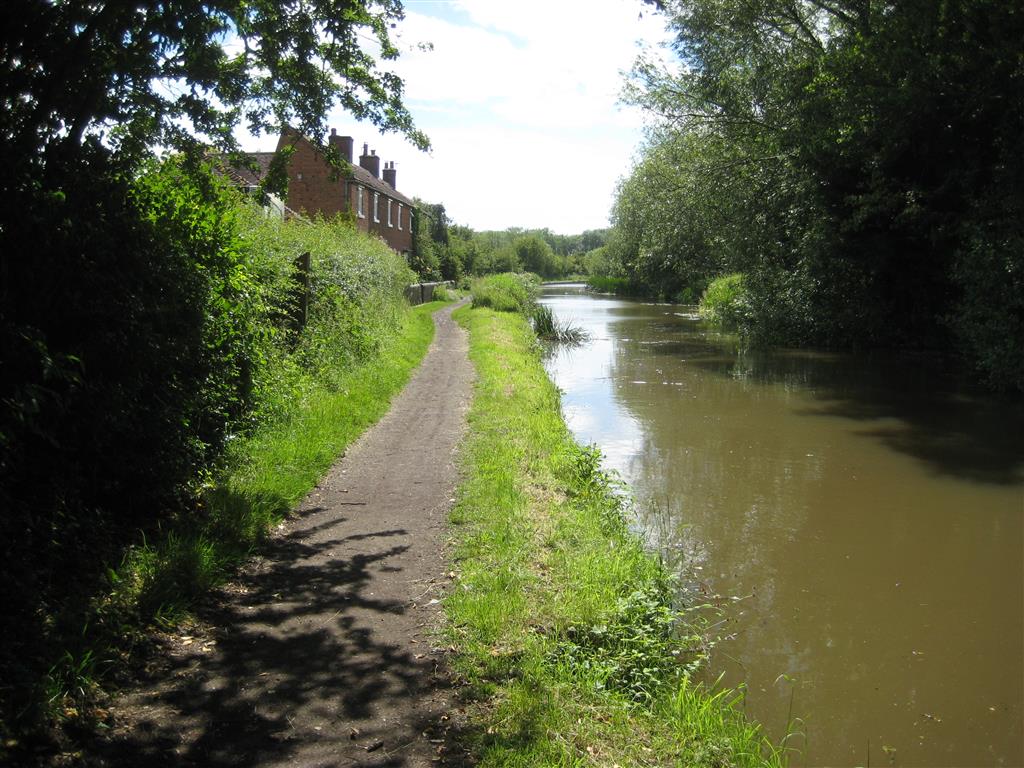
However, the transmitter is just off an obnoxious stretch of the A38, so as someone who prefers to walk and cycle, I've been putting it off. In the Netherlands there would be cycling infrastructure all the way, but not here. But I had an itch that needed to be scratched, so last week I pored carefully over Open Street Map and OS maps, and realised there was a way. I could take the Cross City line to Bromsgrove (a few stops from my local stations), and then walk or cycle (I opted to cycle) through the countryside and along the canal to Stoke Prior. I could of course have cycled out via Tardebigge, which is a relatively pleasant route that I have done in the past, but it is rather a long way and on the way back there's the climb back on to the Birmingham plateau, so I thought I would let the train take the strain. That section of the canal at this time of year makes for a delightful cycle ride. Just outside of Stoke Prior I hid my (folded and locked) Brompton in the undergrowth at the edge of a field, and followed some little used footpaths on which I was totally alone apart from sheep and the wildlife. Adjacent to a wheat field with John Denver playing in my head, I disturbed a deer hiding in the shade. Across the train line to Droitwich on the edge of a sheep pasture I accidentally flushed out a vixen with her cubs, before heading out into the pasture to join them, sunshine on my shoulders. Overhead and all around me the birds were twittering, including a skylark. And there was a cute little bunny waiting for me at the transmitter site. Life is just so much more pleasant when you don't take the car.
If you want to take a look yourself, I suggest you don't hang about. The RTÉ long wave transmitter in Ireland was similarly unceremoniously shut down few years ago, the mast cut down, and the whole lot scrapped within a few weeks. Whether you go or not, there is a great video about the transmitter on You Tube.
Worcester and Birmingham Canal Just South of Bromsgrove
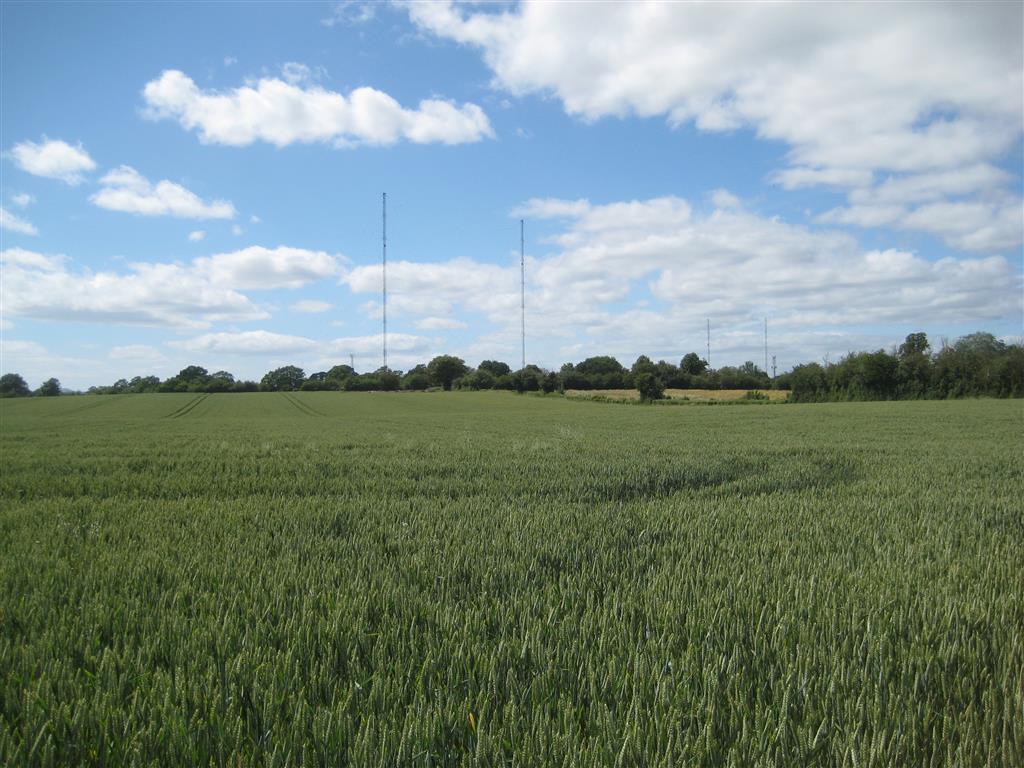
Droitwich Transmitter from Stoke Prior
Transmitter Mast Base at Droitwich
Simple AM Radio